
Louvre Museum Semi-Private Tour | Skip the Line | Max 6
Operated by PARIS UNSCRIPTED
2 hours
Easy
 5 (10)
About this experience
What's included
- Entry or admission fee
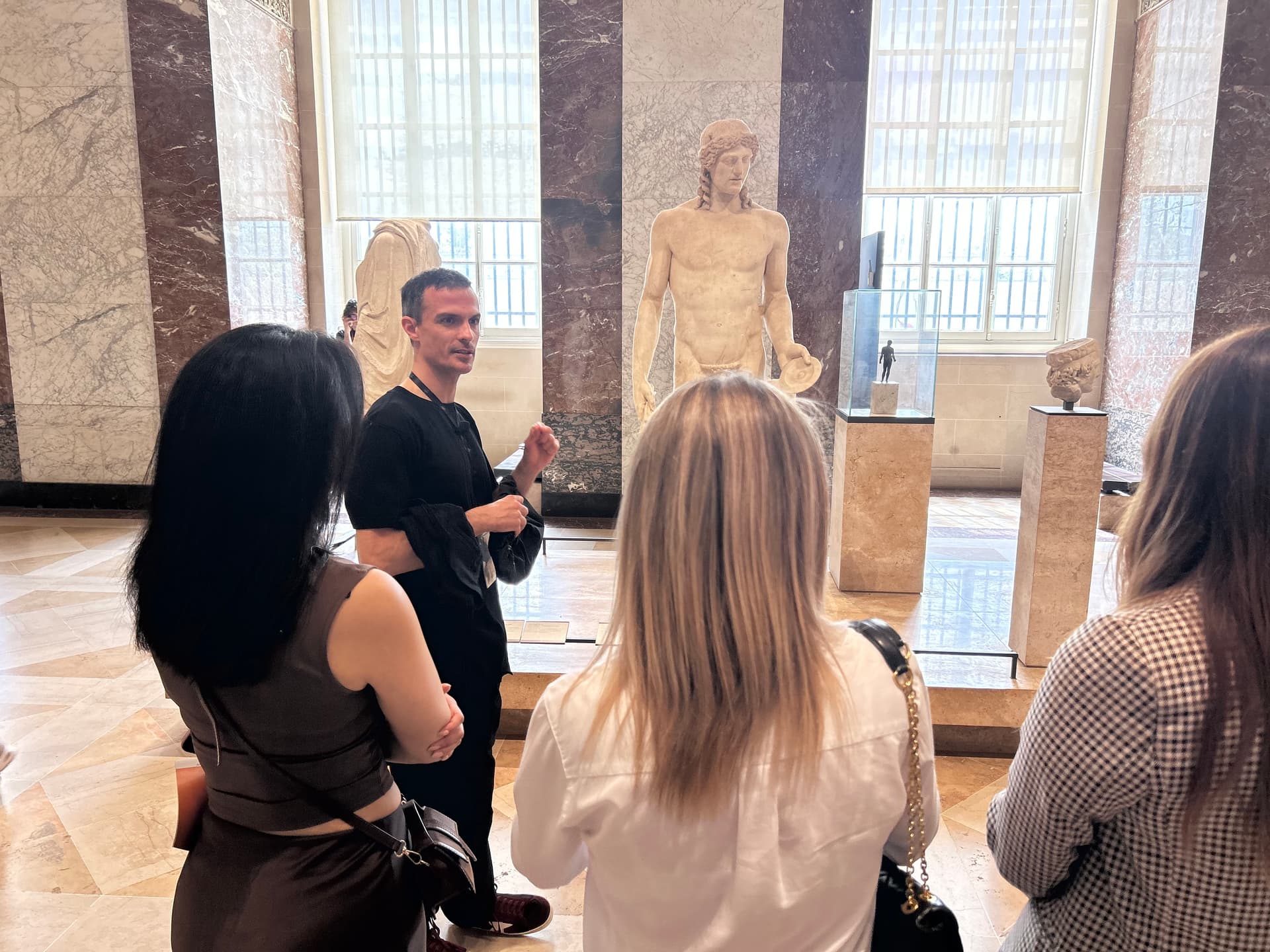
- Expert professional guide
- Skip-the-line entry ticket
- Small group experience (max 6 people)
What's not included
- Bus fare
- Tip or gratuity
- Food & drinks
- Hotel pick up and drop off
Meeting point
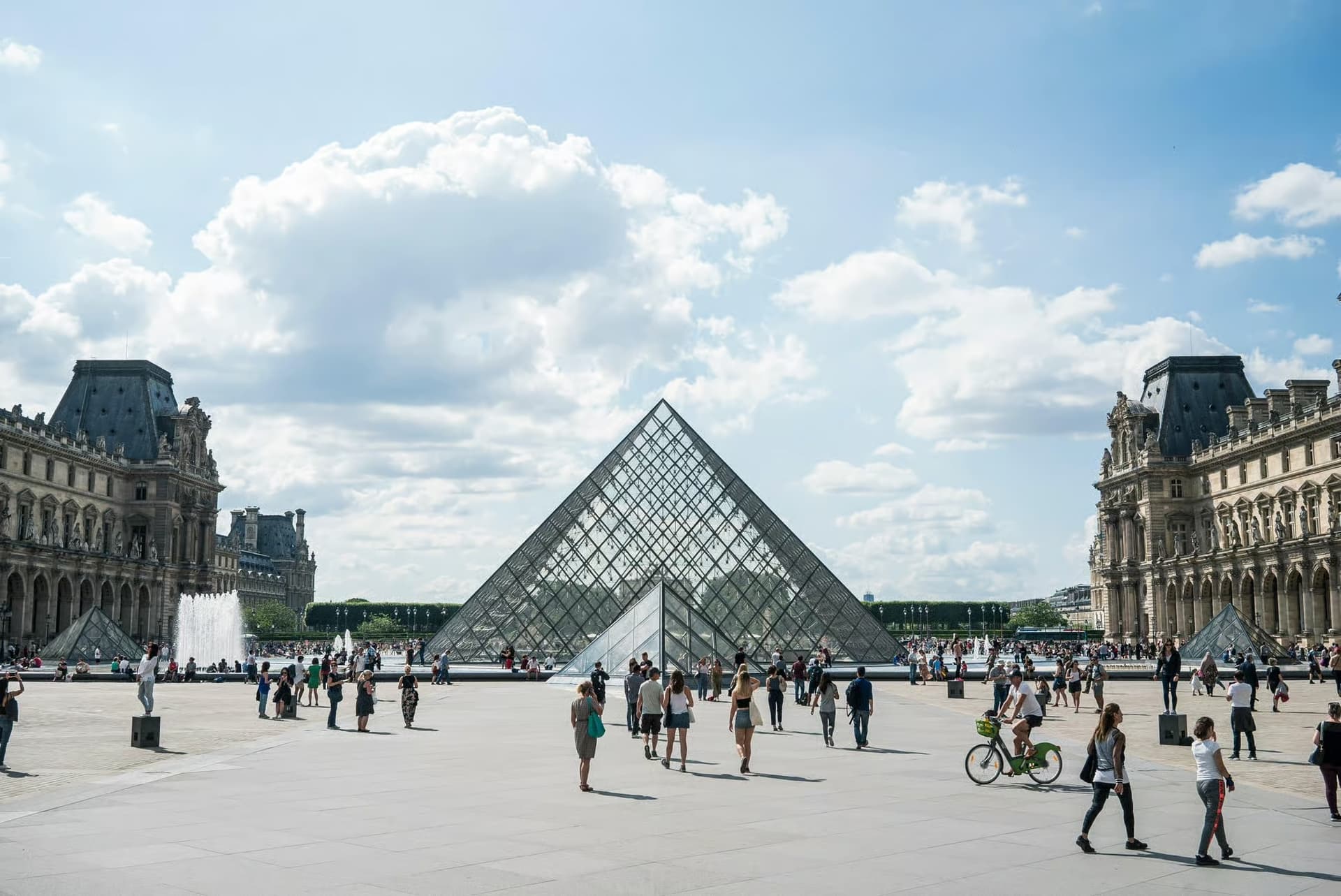
Equestrian statue of King Louis XIV — the only statue in the main Louvre courtyard, in front of the Pyramid. Metro: Palais Royal Lines 1 & 7, Exit 1
Cour Napoléon, Musée du Louvre, 75001 Paris, 75001 Paris, FR
Know before you go
- Public transportation nearby
- Wheelchair accessible
- Meet your guide at the equestrian statue of King Louis XIV, the only statue in the main Louvre courtyard directly in front of the Louvre Pyramid. Metro: Palais Royal – Musée du Louvre, Lines 1 & 7, Exit 1. Your guide will be holding an Orange sign. Please arrive 15 minutes before your tour start time.
- Comfortable shoes recommended
- Valid ID or passport required for museum entry
Requirements
- Valid ID or passport (required for Louvre entry)
- Comfortable walking shoes
- Water bottle
- Camera or fully charged phone
- Sunglasses and sunscreen (for warmer months)
Itinerary
Entry & Orientation
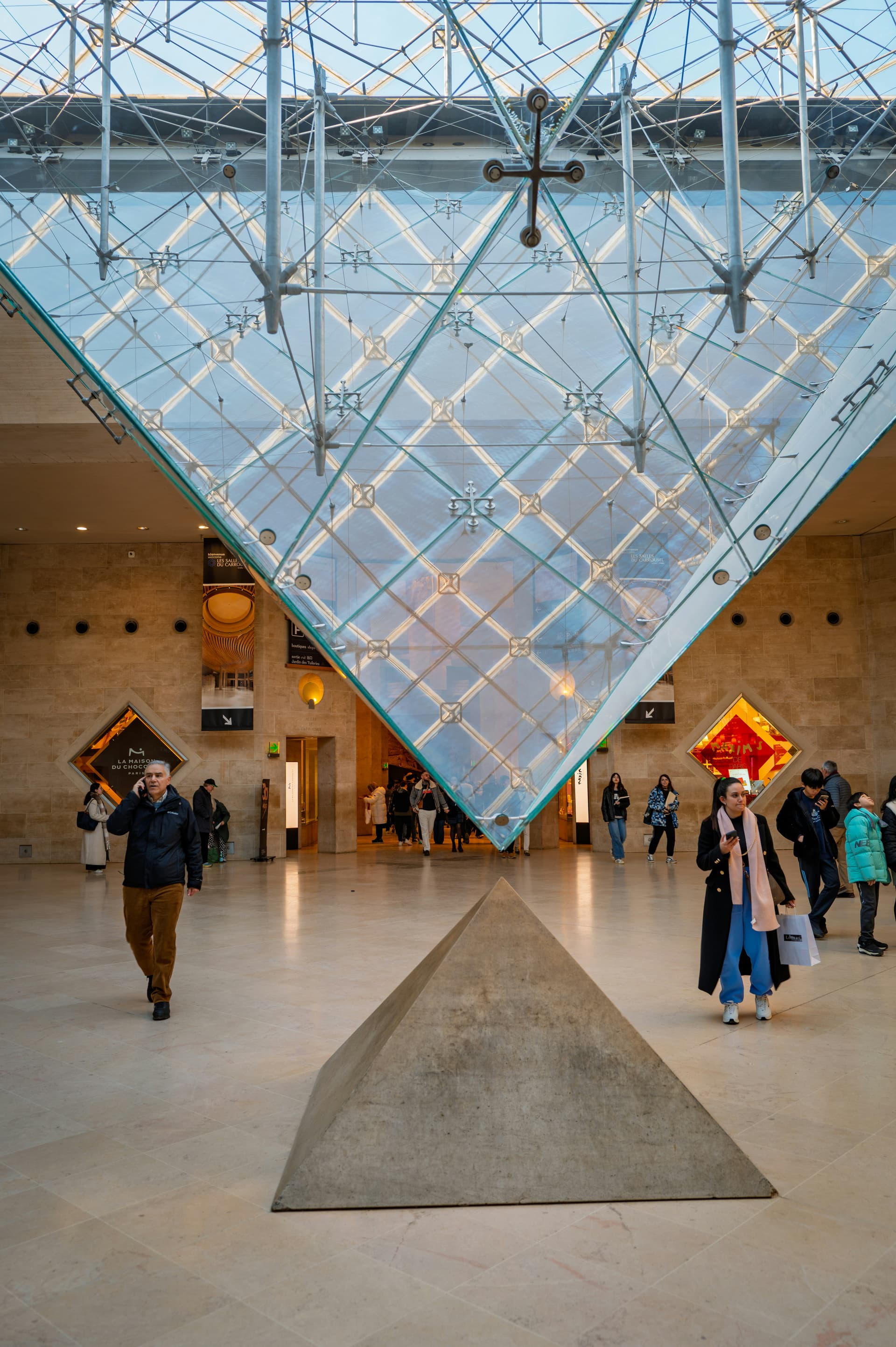
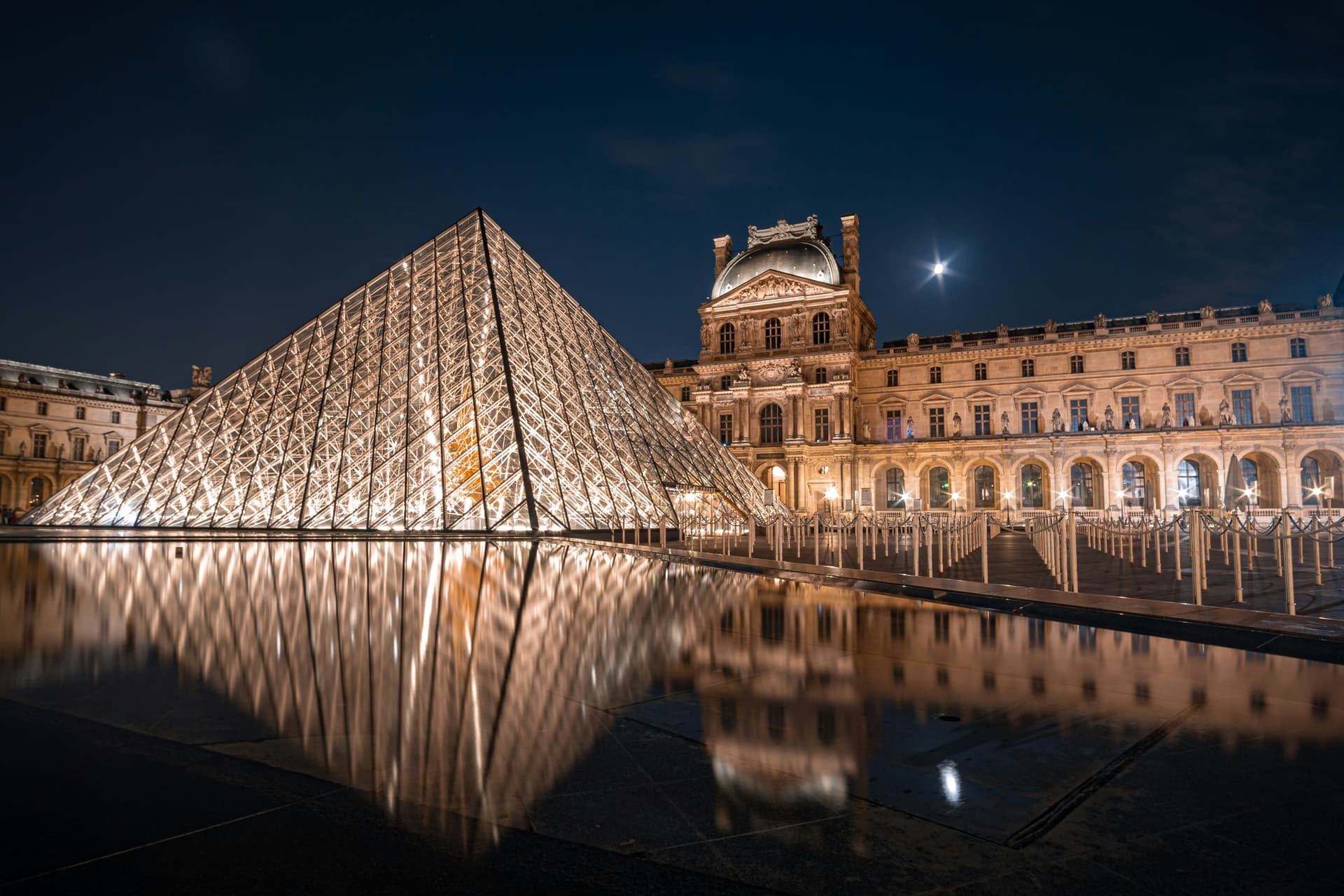
Meet under the Pyramid in the Napoléon Hall. Your guide will brief the group on the three wings — Denon, Sully and Richelieu — and outline today's route. This is also where you will learn why I.M. Pei's glass pyramid caused such controversy when it opened in 1989 — and why it was ultimately the right decisionThe Palace & Its History
Explore the Richelieu Wing corridor where the medieval moat of the original 12th century fortress is still visible beneath your feet. Your guide traces the Louvre's extraordinary journey from royal fortress to palace to the world's greatest museum — all without leaving the building.Ancient Civilisations — Sully Wing
Descend into one of the oldest collections in the Western world. Stand before the Great Sphinx of Tanis — the largest sphinx outside Egypt — and discover the haunting Seated Scribe, a painted limestone portrait over 4,500 years old whose rock crystal eyes seem to follow you across the room. Your guide brings Ancient Egypt to life with stories of how France acquired these extraordinary treasures.Greek Masterpieces — Denon Wing
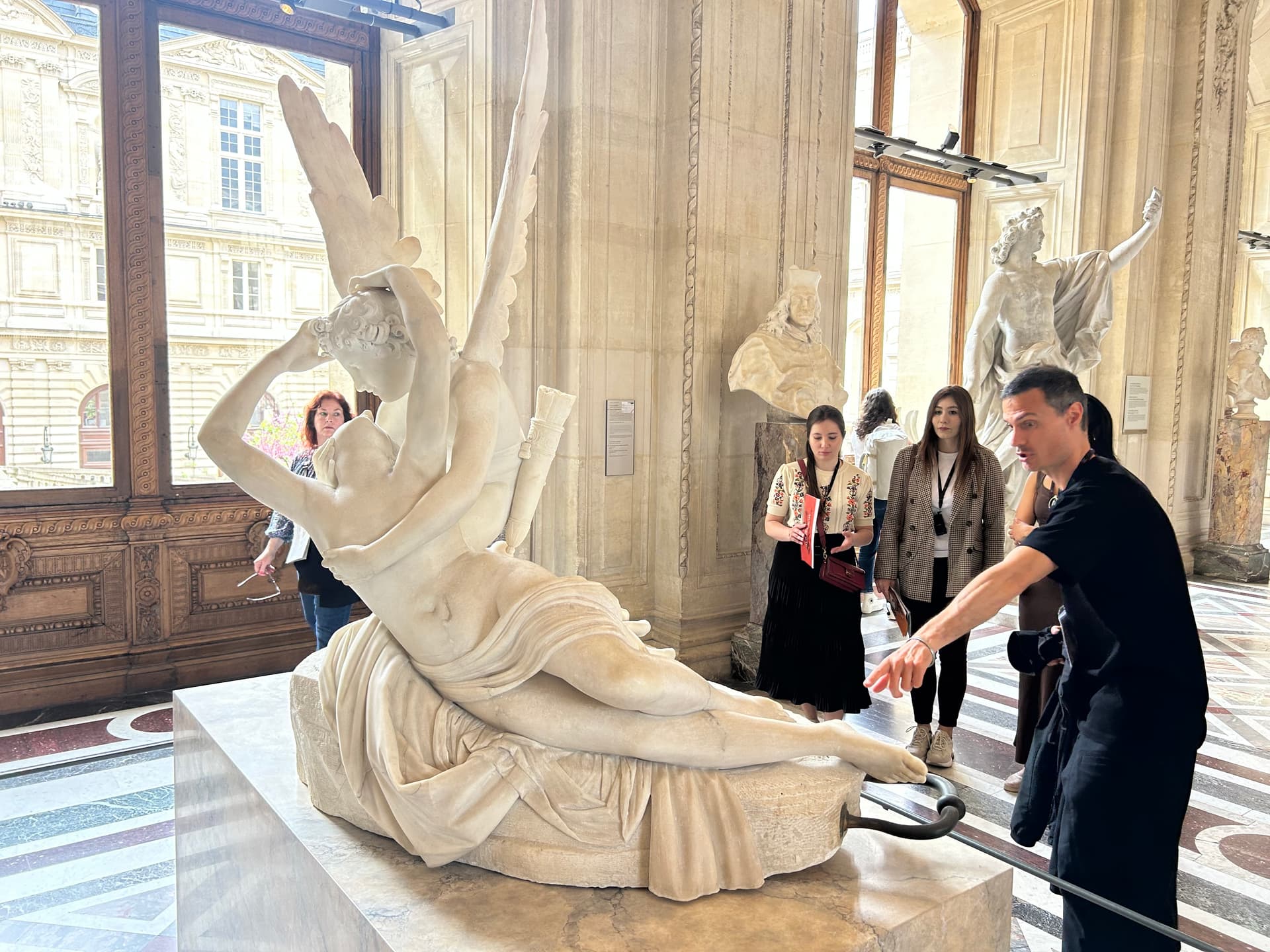
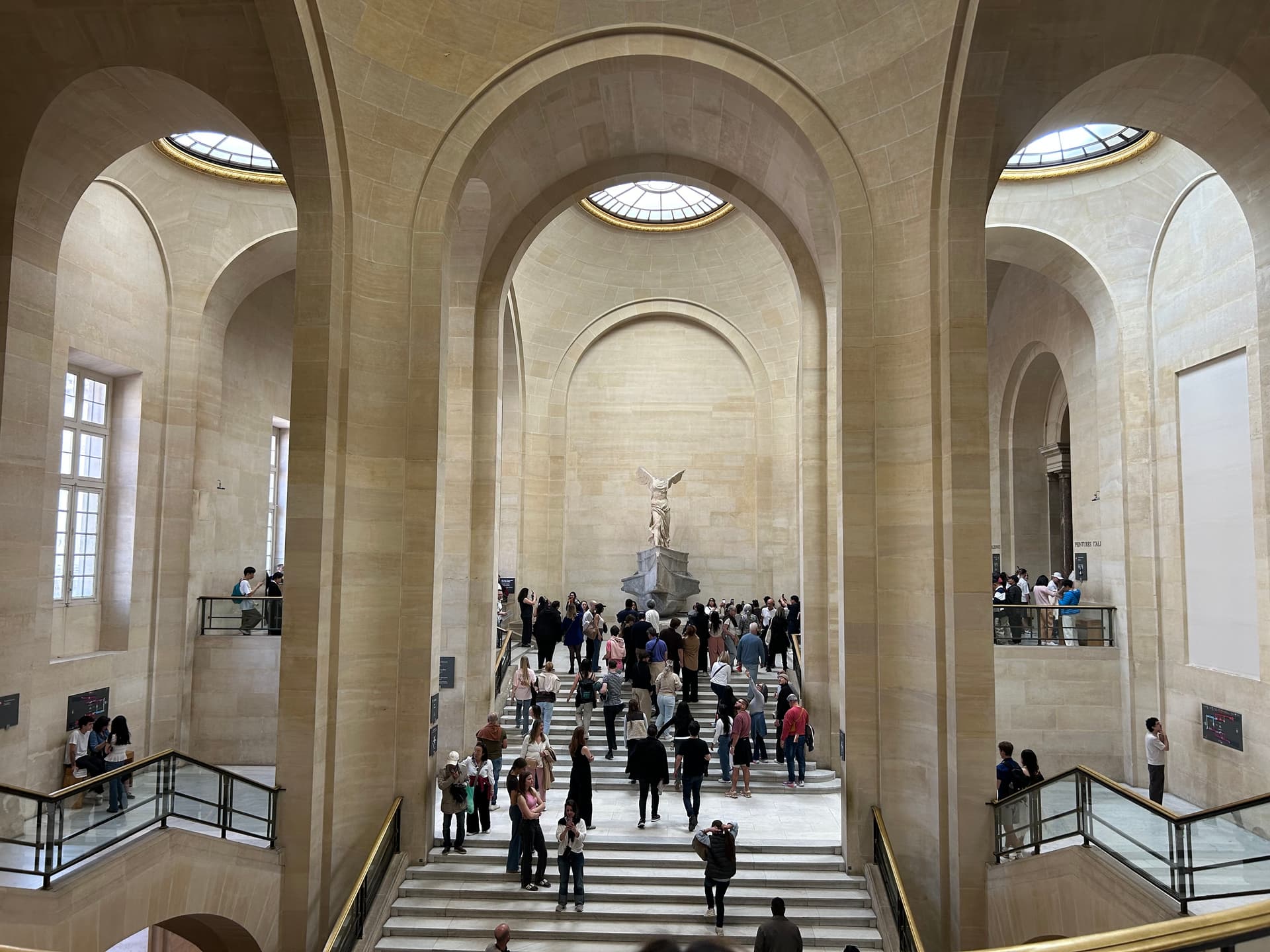
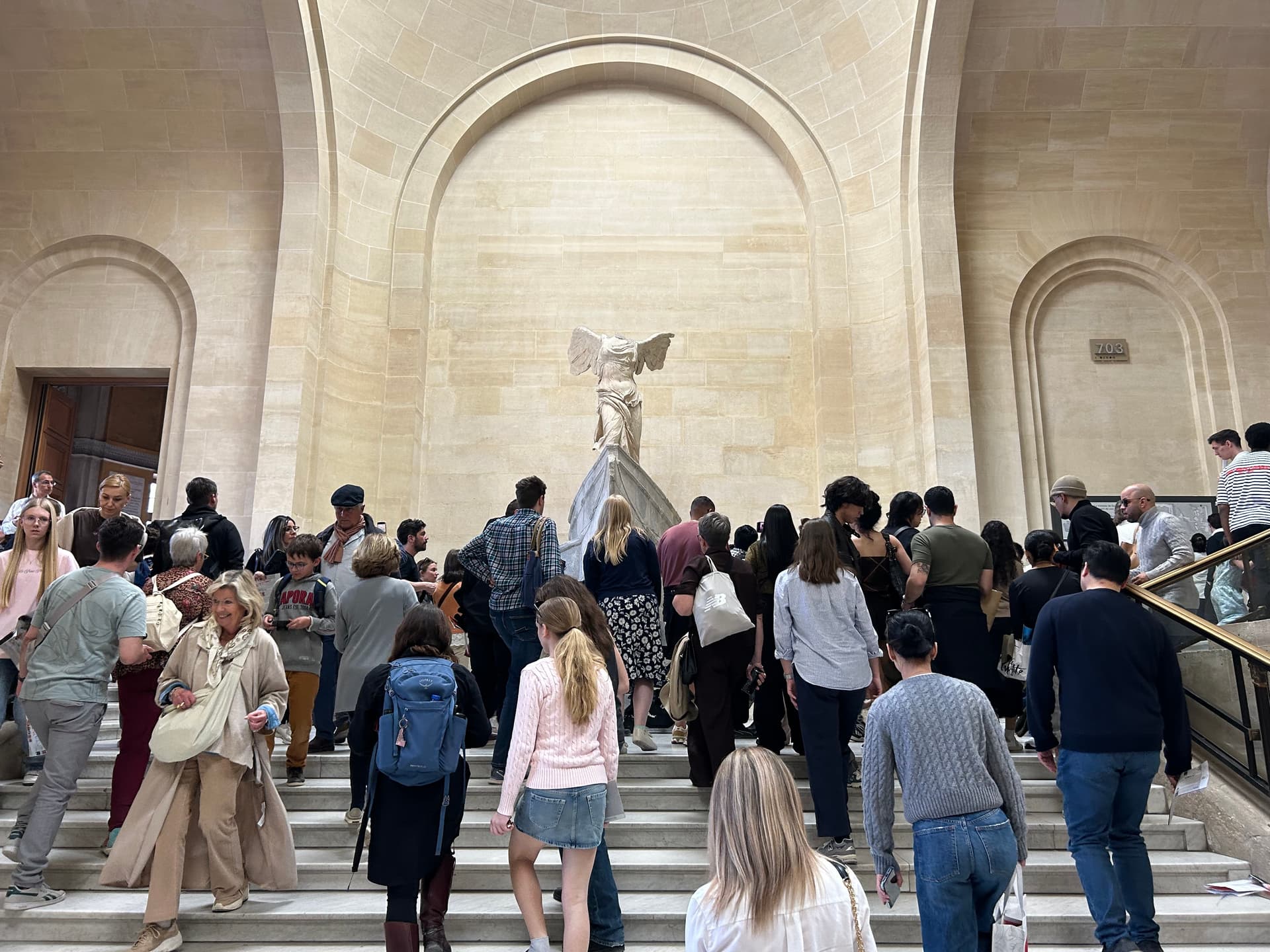
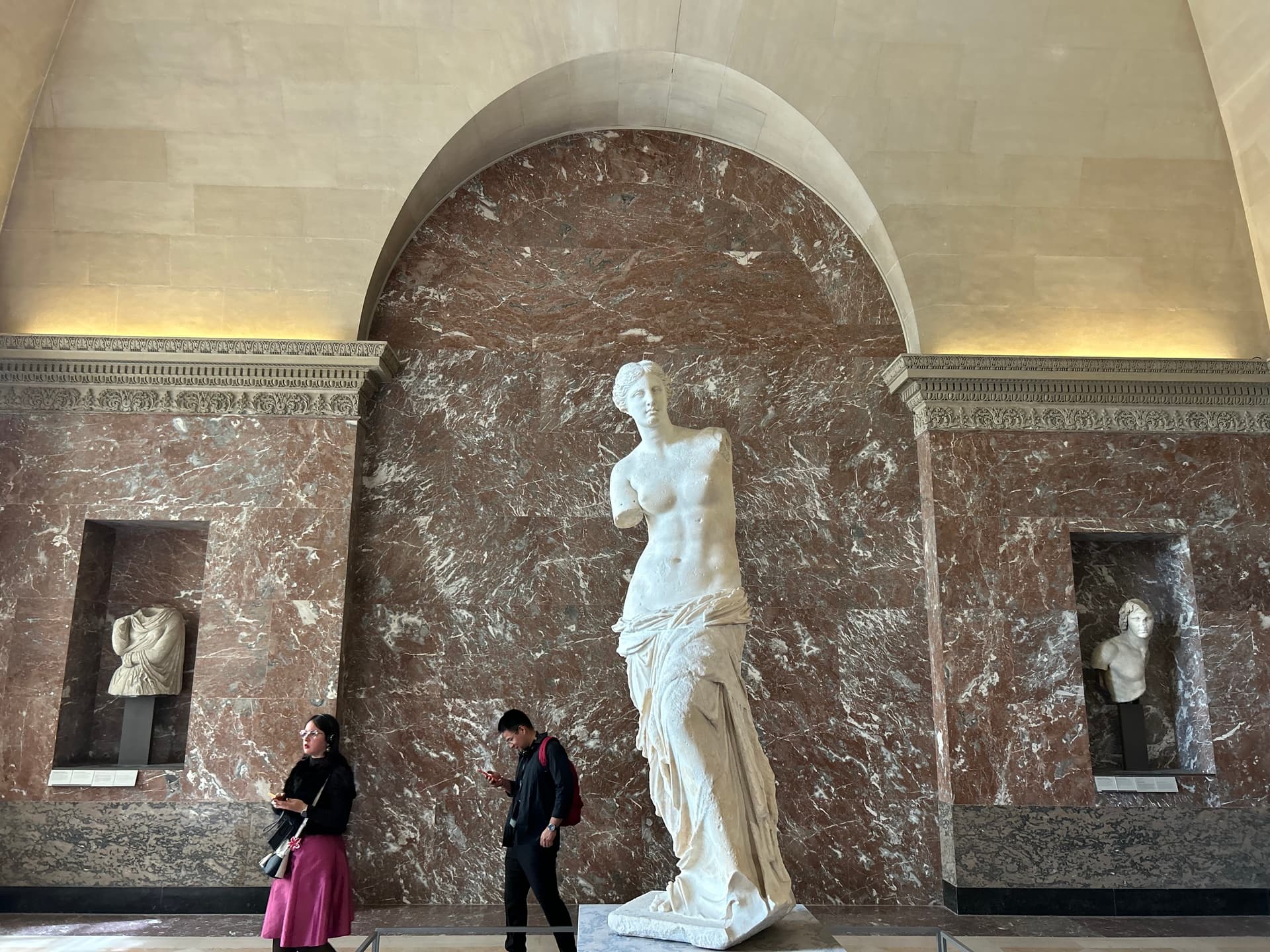
Two of the most iconic sculptures ever created stand in this wing. The Venus de Milo, discovered in 1820 with her arms already missing — their original position still debated today. And the breathtaking Winged Victory of Samothrace, discovered in pieces on a Greek island in 1863, headless for over 2,000 years — and still the most dramatic sculpture in the building. Your guide explains the shift from Classical to Hellenistic sculpture and why emotion changed everything.Italian Renaissance — Grande Galerie
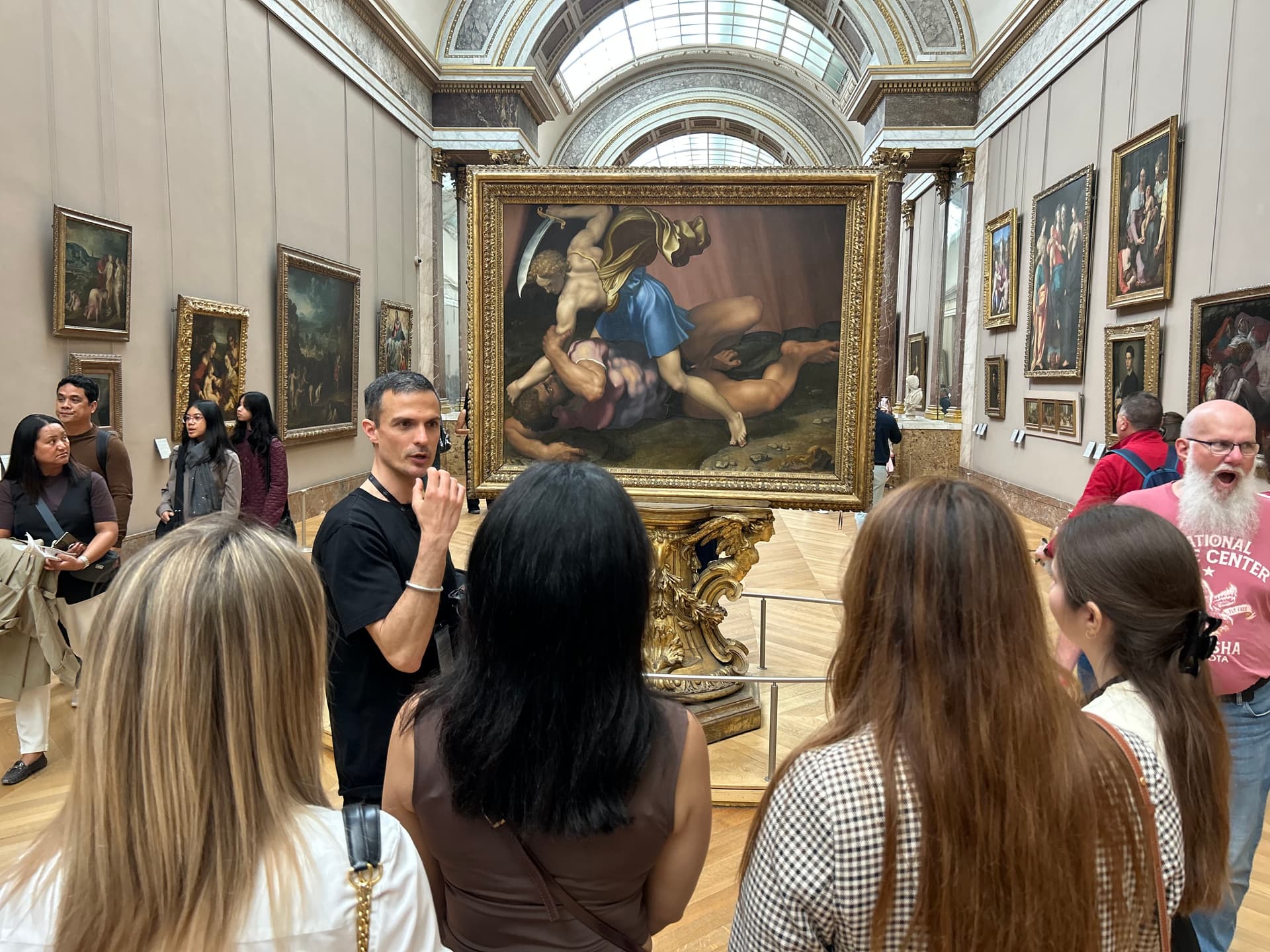
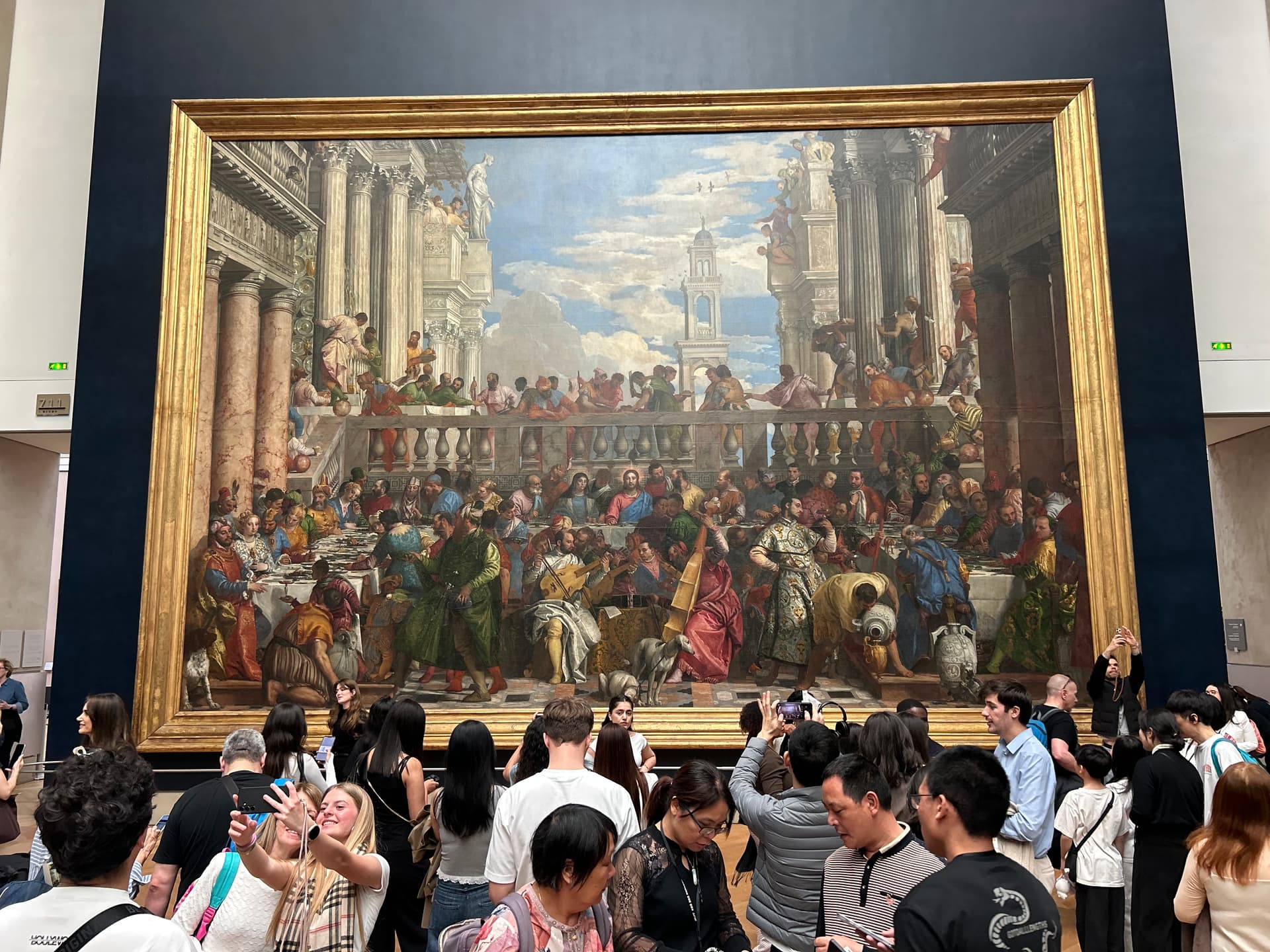
Walk the Grande Galerie — 460 metres of the world's greatest Italian painting. Raphael, Titian, Caravaggio — your guide connects the dots between them and explains how Renaissance artists transformed the way humans saw themselves. Then comes the reveal: Paolo Veronese's Wedding Feast at Cana, 10 metres wide with 67 figures, painted in the same century as the most famous painting in the world. Nobody ever looks at it. Until now.The Mona Lisa
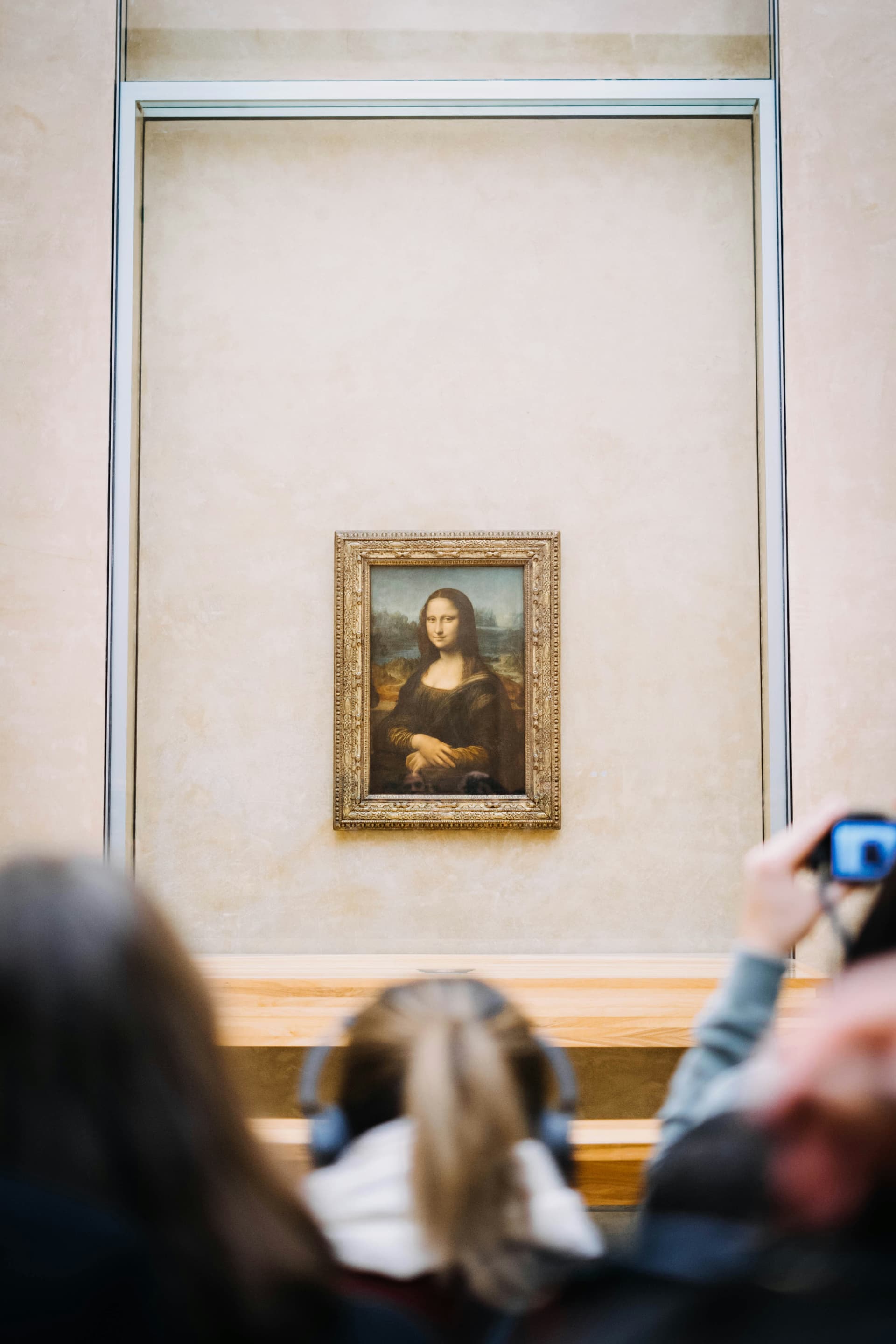
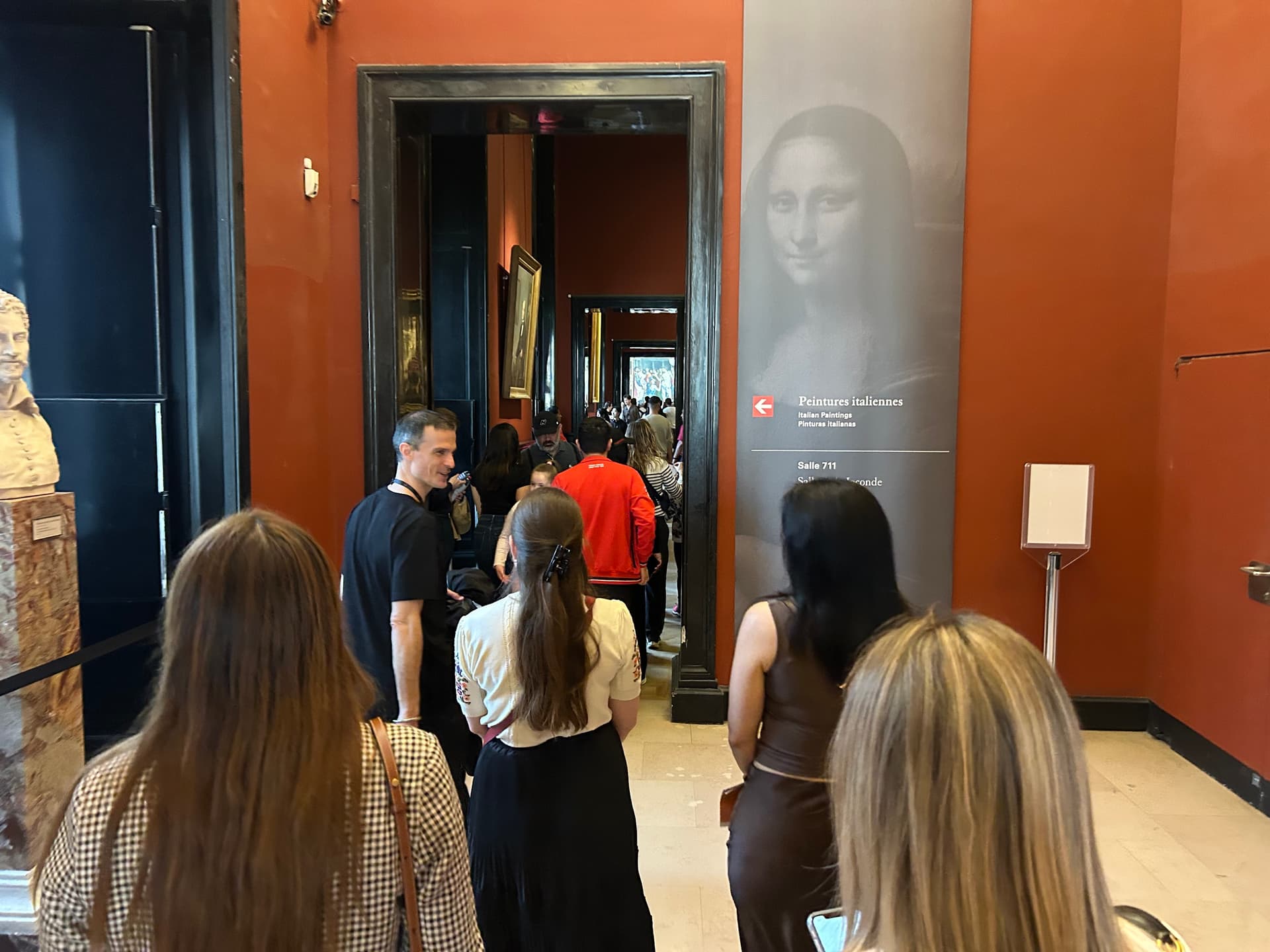
The most famous painting in the world — but do you know why? It is not because Leonardo da Vinci painted it. It is because someone stole it. In 1911 a Louvre employee hid in a supply cupboard overnight, walked out the next morning with the painting under his coat, and disappeared for two years. The empty wall drew larger crowds than the painting ever had. Picasso was briefly a suspect. Your guide tells the full story — and then shows you what da Vinci actually did that no painter before him had ever done.French Masterpieces — Salle Mollien
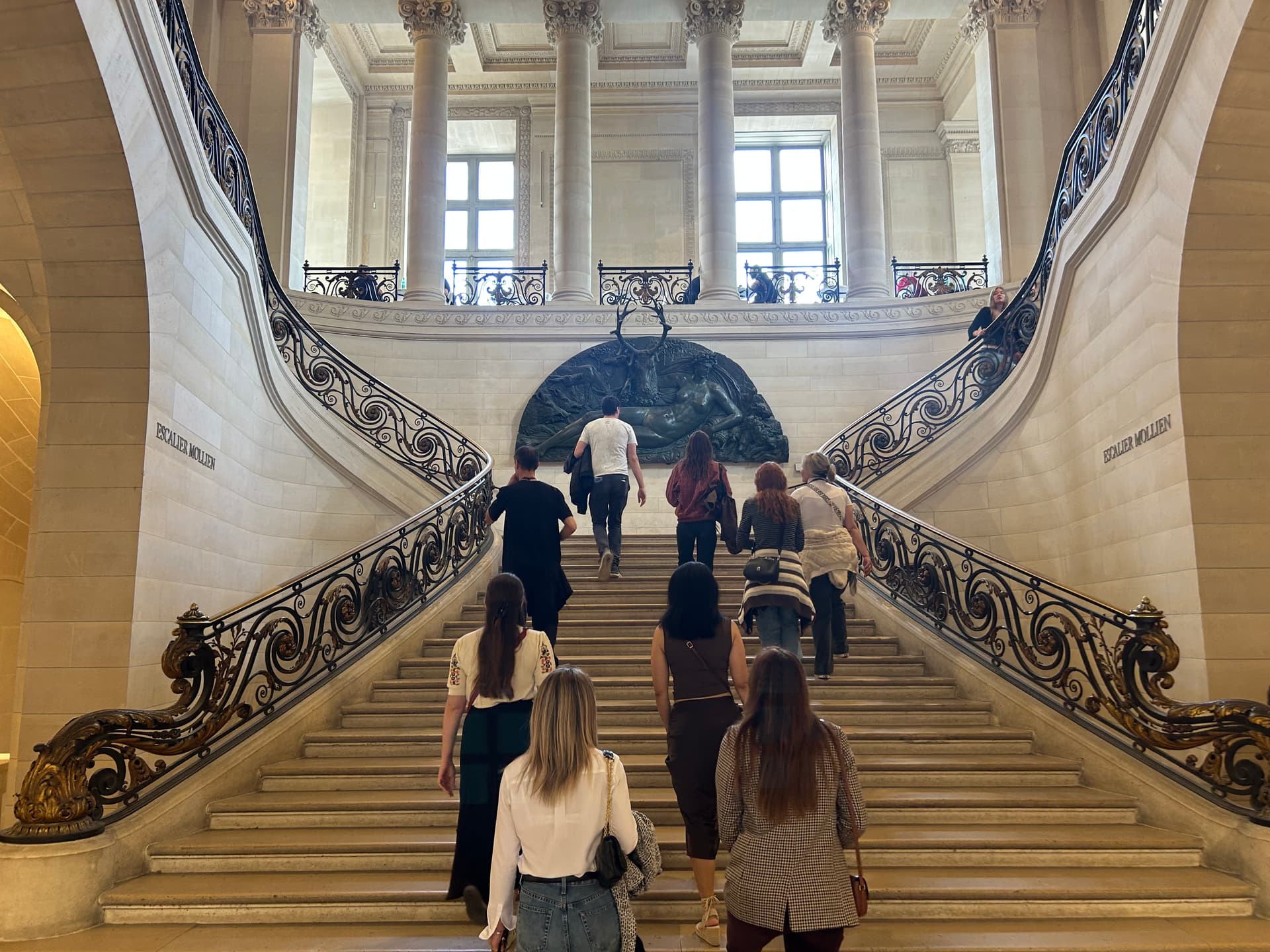
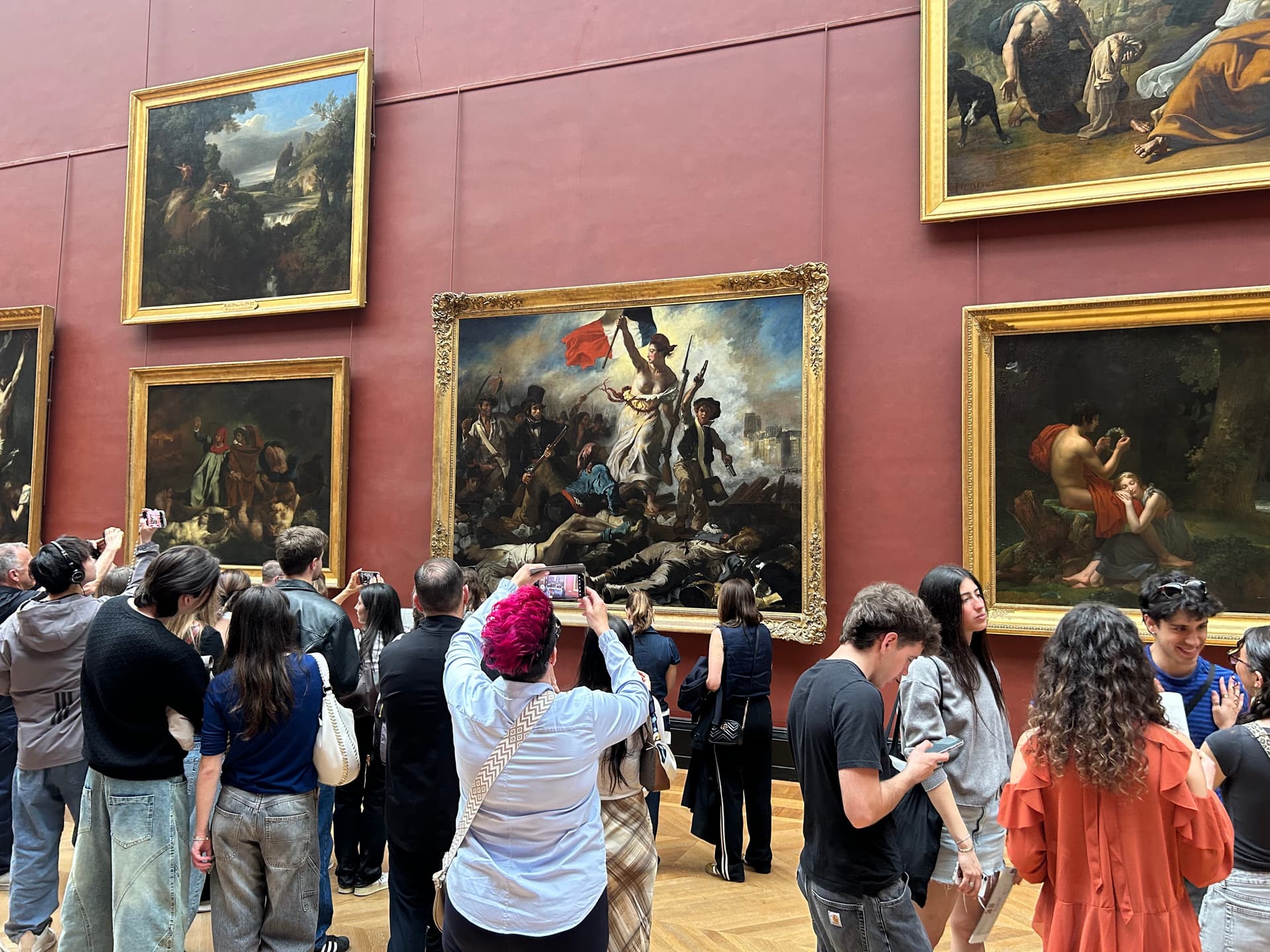
Three paintings, thirty years, the entire arc of French history. David's Coronation of Napoleon — 10 metres wide, painted in 1807, showing the moment Napoleon took the crown from the Pope and placed it on his own head. Géricault's Raft of the Medusa — a real shipwreck, a government scandal, painted just twelve years later. And Delacroix's Liberty Leading the People — the revolution that overthrew Napoleon's successors, painted in 1830. One wall. Thirty years. France transformed.Michelangelo's Slaves — Tour Close
We end with two of only four Michelangelo sculptures outside Italy. The Dying Slave and the Rebellious Slave were intended for Pope Julius II's tomb — but they never made it. Instead they became a gift from Henry II of France to his finance minister, spent 200 years in a private garden, and arrived at the Louvre almost by accident. Notice the unfinished surfaces — figures emerging from rough marble. Michelangelo called this his non-finito technique. Deliberate or unfinished? Your guide leaves you to decide.
Book this experience
From$73
Free cancellation available
English, Spanish, French
From $73
2h · Free cancellation